Malaysia has some of the biggest and longest caves in the world,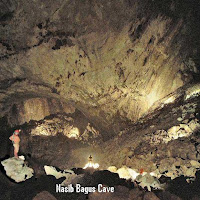 some caves are archaeological sites, others are beautiful with stalagmites and stalactites, and maybe underground rivers. Some caves are home to a wide variety of cave fauna such as bats, swiftlets, snakes, and invertebrates. These include insects, spiders, beetles, cockroaches, centipedes and millipedes. Amongst the most famous caves in the world are the caves in Gunung Mulu National Park, Sarawak, which was inscribed as a World Heritage site in 2001. More than 325 km of cave passage has been mapped in Mulu. Some of the caves there are world record holders, such as Gua Nasib Bagus, which houses the world's largest chamber, Sarawak Chamber. Clearwater Cave is the 8th longest in the world, at 177 km (Mar 2009). Deer Cave is one of the world's largest cave passages. Niah Caves, also in Sarawak, is a famous archaeological site. A 40,000 year old human skull was found there and rock paintings have been dated at 1200 years old. Near Kuching, the Bau caves are worthy of a visit.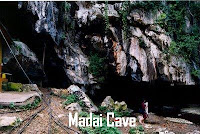
 some caves are archaeological sites, others are beautiful with stalagmites and stalactites, and maybe underground rivers. Some caves are home to a wide variety of cave fauna such as bats, swiftlets, snakes, and invertebrates. These include insects, spiders, beetles, cockroaches, centipedes and millipedes. Amongst the most famous caves in the world are the caves in Gunung Mulu National Park, Sarawak, which was inscribed as a World Heritage site in 2001. More than 325 km of cave passage has been mapped in Mulu. Some of the caves there are world record holders, such as Gua Nasib Bagus, which houses the world's largest chamber, Sarawak Chamber. Clearwater Cave is the 8th longest in the world, at 177 km (Mar 2009). Deer Cave is one of the world's largest cave passages. Niah Caves, also in Sarawak, is a famous archaeological site. A 40,000 year old human skull was found there and rock paintings have been dated at 1200 years old. Near Kuching, the Bau caves are worthy of a visit.
Gomantong Caves in Sabah are reknown for their birds' nest industry. There are many other caves scattered across Sabah such as Madai and Baturong.
In Peninsular Malaysia caves can be found in all states north of Kuala Lumpur. The tropical karst towers occur as steep isolated hills rising from the valley floors. The Batu Caves near KL are a famous tourist destination and site of the annual Thaipusam festival. The nearby Dark Cave is one of the longest caves in the peninsula, and is home to a wide range of cave fauna. Perak has many cave temples as well as Gua Tempurung which is open to the public and is equipped with  electric lighting and walkways. It has a fine river passage and some enormous chambers. There are many wild caves which can be visited by people equipped for caving. The Lenggong Valley is an important archaeological site, where Perak Man, an 11,000 year old skeleton was found. Perlis has some interesting river caves, some of which have been mined for tin. Gua Kelam 2 is one of the Peninsula's longest caves and accessible to adventure cavers, likewise Gua Wang Burma. In Pahang there are the Charas Caves. The caves at Kota Gelanggi and Gunung Senyum. have been developed for tourism. There are caves in Taman Negara and Kenong Rimba. Kedah, Kelantan and Terengganu all have caves worthy of a visit. Many foreign spelaeologists come to Malaysia to document the caves and study the fauna etc. In Kedah, the Langkawi islands have been listed as a Geopark . Langkawi is now the world's 52nd Geopark and the first in Southeast Asia, following its listing in the UNESCO Global Network of Geoparks on June 1 2007. However in July 2008 it was announced that the name "Langkawi, the Jewel of Kedah" would replace "Langkawi Geopark".Few caves are protected unless they come under the protection of a state park, or forest reserve, or are used as a recognised temple. Some that do have protection are those in the Perlis State Park, in Taman Negara, in Kenong Rimba Park, Gunung Senyum Recreational Park and the Dabong caves in the Gunung Stong State Park.
 electric lighting and walkways. It has a fine river passage and some enormous chambers. There are many wild caves which can be visited by people equipped for caving. The Lenggong Valley is an important archaeological site, where Perak Man, an 11,000 year old skeleton was found. Perlis has some interesting river caves, some of which have been mined for tin. Gua Kelam 2 is one of the Peninsula's longest caves and accessible to adventure cavers, likewise Gua Wang Burma. In Pahang there are the Charas Caves. The caves at Kota Gelanggi and Gunung Senyum. have been developed for tourism. There are caves in Taman Negara and Kenong Rimba. Kedah, Kelantan and Terengganu all have caves worthy of a visit. Many foreign spelaeologists come to Malaysia to document the caves and study the fauna etc. In Kedah, the Langkawi islands have been listed as a Geopark . Langkawi is now the world's 52nd Geopark and the first in Southeast Asia, following its listing in the UNESCO Global Network of Geoparks on June 1 2007. However in July 2008 it was announced that the name "Langkawi, the Jewel of Kedah" would replace "Langkawi Geopark".Few caves are protected unless they come under the protection of a state park, or forest reserve, or are used as a recognised temple. Some that do have protection are those in the Perlis State Park, in Taman Negara, in Kenong Rimba Park, Gunung Senyum Recreational Park and the Dabong caves in the Gunung Stong State Park.
 Caving Guide
- Always take a reliable guide, who can be hired from the National Parks or fromcaving clubs. Many of Malaysia's caves are unmapped and not even an experienced caver should go exploring alone. Groups of four are optimum.
- Although some operators offer cave diving, it is a highly specialized sport and should only be undertaken by professional divers and cavers.
- Always check equipment before venturing into a cave especially when abseiling.
Experienced cavers recommend a maximum of eight hours in a cave at a stretch but mast caves take less than three hours to' explore. - Plan how much lighting you will need. One kilogram of carbide will give enough illumination far approximately six to' eight hours.
- Cavers should always carry back-up torches and extra batteries.
- Heart patients and those suffering from claustrophobia should limit themselves to' show caves where guides take in groups of 20 to' 40 people., Cavers should be free from allergies related to limestone and bat guano.
Perlis State
Gua Kelam (Kelam Cave)
 One of the most distinctive caves in Malaysia is a 370-metre long limestone cave near the small town of Kaki Bukit (literally 'foot hill') called Gua Kelam (Cave of Darkness). Located about 33km north of Kangar, the state capital, Gua Kelam Recreational Park is popular for its enchanting 'cave walk' where you can enter from one end of the cave and come out at a different location.
The only path to the cave is via an eight-foot wide wooden suspension bridge. This bridge links Kaki Bukit to the Wan Tangga Valley, a valley on the opposite end of Gua Kelam. Back in 1935, an Englishman saw the water pathway as a brilliant method to transport tin ore from a mine located near the stream entrance through the underground cavern to Kaki Bukit.
Now, locals and tourists make their way through the cave via a brightly lit wooden walkway inside the cave. You can still find remnants of the tin mine operation within the cave. As you make your way through the cave, the whispers of a swirling dark subterranean stream, together with the squeaking bats and dripping water from the stalactites, form a concerto of natural sounds. It sounds a bit spooky, but adds to the mystery of a cave that was was once the home of Stone Age men.
Perak State
Gua Tempurung (Tempurung Cave)
Believed to have existed since 8000 B.C., Gua Tempurung is probably the largest natural limestone cave in Malaysia. Situated about 24 km fron Ipoh, the cave stretches for 1.5 km and is made up of five hugh domes whose ceilings resemble coconut shells. Each dome has different formations of stalagmites and stalacties as well as differing temperature, water levels, content of limestone and marble.
Pahang State
Taman Negara (National Park)
At Kuala Tahan. Taman Negara, or the National Park, boasts of jungles that date back millions of year, making them older than those of the Congo or Amazon. With 4,343 sq km of luxuriant tropical rain forest, the park is a heaven for adventurers. Picturesque trails, giant trees, limestone caves, excellent fishing spots, exciting river trips and ample jungle trekking trails offer a multitude of such adventure opportunities. The park’s canopy walk which is 25 metres high and over 400 metres long is the world’s longest. As it lies on the top layer of vegetation in a forest, you will have an extraordinary view of the plant and animal species found there. Wildlife observation can be done from observation hides built around the many salt-licks. Mountain climbing buffs would enjoy scalling Gunung Tahan, which at 2,187 metres is the highest mountain in Peninsular Malaysia. River trips are an enjoyable activity within the park, especially those involving shooting the rapids. For the less stalwart, there are meandering cruises that let you enjoy the surrounding scenery at a leisurely pace. Fishing is best done in February, march, July and August, and it takes two days to reach the best fishing areas located along Sungai Tahan near Lata Berkoh and Sungai Kenyam. Camping grounds in verdant surroundings are to be found in the park. Accommodation at the park is available in the Rest House, chalets and a hostel, all fitted with basic utilities. Hotels here are:
Taman Negara Resort (Tel: 609-2663500/ Fax: 609-2661500)
Nusa Camp Holiday Village Sdn. Bhd. (Tel: 609-2662369/ Fax: 609-2664369)
Teresek View Village (Tel: 609-2663065)
Ekoton Chalet (Tel: 609-2669897)
Kenong Rimba Park
At Lipis. Kenong Rimba Park is situated in natural surroundings with cascading waterfalls, clear mountain stream and a variety of flora and fauna. The merry chirping of birds will create an atnosphere which is really difficult to express in words. It offers great adventure, such as exploring limestone caves, swimming in the river and camping. Challenging hiking trails interspersed with protruding rocks and untouched natural surroundings is a haven for adventure lovers. Within the Kenong Rimba Park, these are several caves (gua) to explore. These are Gua Batu Telungkup, Gua Hijau and Gua Harimau. The caves, situated approximately 122-152 metres above sea level, are a natural habitat for a range of flora and nature’s other marvels. For nature lovers, a stop at Kenong Rimba Park is a must. It is a perfect hideout for bird watchers, campers, anglers, trekkers and swimmers. Hotels here are:
Persona Rimba Resort (Tel: 609-3125032/ Fax: 609-3121421)
Lipis Centre Point Hotel (Tel: 609-3122688/ Fax: 609-3122689)
Lipis Inn Hotel (Tel: 609-3125588/ Fax: 609-3125588)
Kota Gelanggi
 Located in Jerantut. One of the highlights for visitors to this area is exploring the Kota Gelanggi Cave. Explore the 150 milion year old historical and mythical cave complex and its unique fauna, flora and rock formations. The magnificent cave chambers are among the best in this region. Visitors will be able to experience what tropical limestone caverns are all about, with their myriads stalagmites and stalactites and strangely shaped formations. Hotel here are:
Tekam Plantation Resort (Tel: 609-4718300/ Fax: 609-4718253)
Gunung Senyum Caves (Senyum Mountain Cave)
Located in Temerloh. The Gunung Senyum Caves consists of at least 20 caves, which are fascinating to explore. While cave exploration and camping in the shade of tropical foliage are common activities, scientific research is also gaining in popularity among students and scientists. Cave explorers must be prepared for the smell of bats, limestone rocks and the sighting of strange creatures and insects. Hotels here are:
Tekam Plantation Resort (Tel: 609-4718300/ Fax: 609-4718253)
Seri Malaysia Hotel Temerloh (Tel: 609-2965776,5779,5787/ Fax: 609-2965711)
Tekam Plantation Resort
Located in Jerantut. Nestled in tranquility in the green forests near Jerantut is the Tekam Plantation Resort, comprising chalets, dining facilities for travellers as well as conventions. Visitors can also arrange for special trips and adventure tours to various places of interest. One of the highlights of the stay at the Resort is the Plantation Tour, which take visitors on an educational visit to places such as the Kota Gelanggi Caves, Gunung Senyum Caves as well as surrounding rubber and oil palm plantations. The best time to visit the area is during the fruit season from July to September, when local fruits such as ‘durians’ and ‘rambutans’ are plentiful. The Resort provides facilities such as tennis and takraw, mini market, water sports and cafeteria. Hotels here are:
Tekam Plantation Resort (Tel: 609-4718300/ Fax: 609-4718253)
Sabah State
 Gomantong Caves (Sandakan)
For centuries, the caves in this limestone outcrop, once accessible by a stream off the Kinabatangan River, have been harvested for their valuable edible birds nests. Harvesting continues to this day, although it is regulated by the Wildlife Department to avoid over-exploitation.
Two cave complexes produc different types of nests, the less valuable ‘black’ nests which consist of hardened saliva mixed with feathers, gathered in the easily accessible Simud Hitam Cave. This cave, with its roof soaring up to 90 metres high, is just a five-minutes walk from the Registration Centre and picnic area, and gives visitors a glimpse of the remarkable life within a limestone cave. Swiftlets, who make the valuable nests, and bats share the caves with thousands of insects which live in the rich guano on the floor.
The Simud Puteh Cave complex, much larger and less easily accessible than Simud Hitam Cave, is where the more valuable ‘white’ nests made of pure saliva are found; these can fetch more than US$500 per kilo. Twice a year, licensed collectors gather the nest in a dangerous operation involving the use of rattan ladders, ropes and poles. The nest are first harvested just after the birds have made them (between February and April). The birds then build new nests, which are left undisturbed until after the eggs have been laid and hatched; these nests are then gathered, some time between July and September. The birdlife around the caves is particularly rich, with Crested Serpent Eagles, Kingfishers, Asian Fairy Bluebirds and Leafbirds often sighted. Large groups of vividly coloured butterflies are frequently found feeding on along the road leading through the forest into the caves.
Gua Tempurung (Tempurung Cave)

Believed to have existed since 8000 B.C., Gua Tempurung is probably the largest natural limestone cave in Malaysia. Situated about 24 km fron Ipoh, the cave stretches for 1.5 km and is made up of five hugh domes whose ceilings resemble coconut shells. Each dome has different formations of stalagmites and stalacties as well as differing temperature, water levels, content of limestone and marble.
Pahang State
Taman Negara (National Park)
At Kuala Tahan. Taman Negara, or the National Park, boasts of jungles that date back millions of year, making them older than those of the Congo or Amazon. With 4,343 sq km of luxuriant tropical rain forest, the park is a heaven for adventurers. Picturesque trails, giant trees, limestone caves, excellent fishing spots, exciting river trips and ample jungle trekking trails offer a multitude of such adventure opportunities. The park’s canopy walk which is 25 metres high and over 400 metres long is the world’s longest. As it lies on the top layer of vegetation in a forest, you will have an extraordinary view of the plant and animal species found there. Wildlife observation can be done from observation hides built around the many salt-licks. Mountain climbing buffs would enjoy scalling Gunung Tahan, which at 2,187 metres is the highest mountain in Peninsular Malaysia. River trips are an enjoyable activity within the park, especially those involving shooting the rapids. For the less stalwart, there are meandering cruises that let you enjoy the surrounding scenery at a leisurely pace. Fishing is best done in February, march, July and August, and it takes two days to reach the best fishing areas located along Sungai Tahan near Lata Berkoh and Sungai Kenyam. Camping grounds in verdant surroundings are to be found in the park. Accommodation at the park is available in the Rest House, chalets and a hostel, all fitted with basic utilities. Hotels here are:
Taman Negara Resort (Tel: 609-2663500/ Fax: 609-2661500)
Nusa Camp Holiday Village Sdn. Bhd. (Tel: 609-2662369/ Fax: 609-2664369)
Teresek View Village (Tel: 609-2663065)
Ekoton Chalet (Tel: 609-2669897)
Kenong Rimba Park
At Lipis. Kenong Rimba Park is situated in natural surroundings with cascading waterfalls, clear mountain stream and a variety of flora and fauna. The merry chirping of birds will create an atnosphere which is really difficult to express in words. It offers great adventure, such as exploring limestone caves, swimming in the river and camping. Challenging hiking trails interspersed with protruding rocks and untouched natural surroundings is a haven for adventure lovers. Within the Kenong Rimba Park, these are several caves (gua) to explore. These are Gua Batu Telungkup, Gua Hijau and Gua Harimau. The caves, situated approximately 122-152 metres above sea level, are a natural habitat for a range of flora and nature’s other marvels. For nature lovers, a stop at Kenong Rimba Park is a must. It is a perfect hideout for bird watchers, campers, anglers, trekkers and swimmers. Hotels here are:
Persona Rimba Resort (Tel: 609-3125032/ Fax: 609-3121421)
Lipis Centre Point Hotel (Tel: 609-3122688/ Fax: 609-3122689)
Lipis Inn Hotel (Tel: 609-3125588/ Fax: 609-3125588)
Kota Gelanggi
 Located in Jerantut. One of the highlights for visitors to this area is exploring the Kota Gelanggi Cave. Explore the 150 milion year old historical and mythical cave complex and its unique fauna, flora and rock formations. The magnificent cave chambers are among the best in this region. Visitors will be able to experience what tropical limestone caverns are all about, with their myriads stalagmites and stalactites and strangely shaped formations. Hotel here are:
Tekam Plantation Resort (Tel: 609-4718300/ Fax: 609-4718253)
Gunung Senyum Caves (Senyum Mountain Cave)

Located in Temerloh. The Gunung Senyum Caves consists of at least 20 caves, which are fascinating to explore. While cave exploration and camping in the shade of tropical foliage are common activities, scientific research is also gaining in popularity among students and scientists. Cave explorers must be prepared for the smell of bats, limestone rocks and the sighting of strange creatures and insects. Hotels here are:
Tekam Plantation Resort (Tel: 609-4718300/ Fax: 609-4718253)
Seri Malaysia Hotel Temerloh (Tel: 609-2965776,5779,5787/ Fax: 609-2965711)
Tekam Plantation Resort
Located in Jerantut. Nestled in tranquility in the green forests near Jerantut is the Tekam Plantation Resort, comprising chalets, dining facilities for travellers as well as conventions. Visitors can also arrange for special trips and adventure tours to various places of interest. One of the highlights of the stay at the Resort is the Plantation Tour, which take visitors on an educational visit to places such as the Kota Gelanggi Caves, Gunung Senyum Caves as well as surrounding rubber and oil palm plantations. The best time to visit the area is during the fruit season from July to September, when local fruits such as ‘durians’ and ‘rambutans’ are plentiful. The Resort provides facilities such as tennis and takraw, mini market, water sports and cafeteria. Hotels here are:
Tekam Plantation Resort (Tel: 609-4718300/ Fax: 609-4718253)
Sabah State
 Gomantong Caves (Sandakan)
For centuries, the caves in this limestone outcrop, once accessible by a stream off the Kinabatangan River, have been harvested for their valuable edible birds nests. Harvesting continues to this day, although it is regulated by the Wildlife Department to avoid over-exploitation.
Two cave complexes produc different types of nests, the less valuable ‘black’ nests which consist of hardened saliva mixed with feathers, gathered in the easily accessible Simud Hitam Cave. This cave, with its roof soaring up to 90 metres high, is just a five-minutes walk from the Registration Centre and picnic area, and gives visitors a glimpse of the remarkable life within a limestone cave. Swiftlets, who make the valuable nests, and bats share the caves with thousands of insects which live in the rich guano on the floor.
The Simud Puteh Cave complex, much larger and less easily accessible than Simud Hitam Cave, is where the more valuable ‘white’ nests made of pure saliva are found; these can fetch more than US$500 per kilo. Twice a year, licensed collectors gather the nest in a dangerous operation involving the use of rattan ladders, ropes and poles. The nest are first harvested just after the birds have made them (between February and April). The birds then build new nests, which are left undisturbed until after the eggs have been laid and hatched; these nests are then gathered, some time between July and September. The birdlife around the caves is particularly rich, with Crested Serpent Eagles, Kingfishers, Asian Fairy Bluebirds and Leafbirds often sighted. Large groups of vividly coloured butterflies are frequently found feeding on along the road leading through the forest into the caves.
Selangor State
Batu Caves
Batu Caves is one of Malaysia's most famous tourist destinations. Every year hundreds of thousands of Hindu devotees congregate here for the colourful Thaipusam festival.
Batu Caves is one of Malaysia's most famous tourist destinations especially for the colourful Thaipusam festival. This attracts up to 800,000 devotees and spectators; the highlight is seeing devotees in a trance carry kavadi , a metal frame attached to the body. Rising almost 100m above the ground, Batu Caves actually consists of three main caves and a few smaller ones. The biggest, referred to as the Temple Cave, has a 100m-high ceiling, and features ornate Hindu shrines. To reach it, visitors have to climb a steep flight of 272 steps.
Batu Caves is one of Malaysia's most famous tourist destinations especially for the colourful
 Thaipusam festival. This attracts up to 800,000 devotees and spectators; the highlight is seeing devotees in a trance carry kavadi , a metal frame attached to the body. Rising almost 100m above the ground, Batu Caves actually consists of three main caves and a few smaller ones. The biggest, referred to as the Temple Cave, has a 100m-high ceiling, and features ornate Hindu shrines. To reach it, visitors have to climb a steep flight of 272 steps.
Below the Temple Cave is the Dark Cave, with its amazing rock formations and a number of animals found nowhere else. Stalactites jutting from the cave's ceiling and stalagmites rising from the floor form intricate formations such as cave curtains, flow stones, cave pearls and scallops which took thousands of years to form. The Malaysian Nature Society organises regular educational and adventure trips to the Dark Caves .
The other main cave is the Art Gallery Cave located at the foot of the steps. Statues and wall paintings depicting Hindu deities and mythology are displayed here. The walk to the entrance is itself quite a pleasant experience through a lake and ponds filled with hundreds of colourful fish.
The other main cave is the Art Gallery Cave located at the foot of the steps. Statues and wall paintings depicting Hindu deities and mythology are displayed here. The walk to the entrance is itself quite a pleasant experience through a lake and ponds filled with hundreds of colourful fish.
Sarawak State
Mulu Cave 
The Gunung Mulu National Park is situated close to the southern border of Brunei with Malaysia, about 100km east-southeast of the town of Miri and 100km due south of Bandar Seri Begawan, Brunei. It lies between the headwaters of the Tutuh River, a tributary of the Baram River and covers 544km2, ranging in elevation from 50 meters to 2,376 meters. The park is important for its high biodiversity and unique karst (limestone) features. Besides that, it contains seventeen vegetation zones, exhibiting some 3,500 species of vascular plants. It was first constituted on 3 October 1974 but only opened to public in 1985.
 The climate here is determined by the Indo-Australian monsoon system. From December to March, it will encounter the wet northeast monsoon and the slightly drier southwest monsoon from May to October. Generally, rainfall is high here with seasonal averages ranging from 4,000 to 5,000mm. Temperatures in the Melinau lowlands range from 23ºC to 26ºC and at Gunung Mulu between 14ºC to 18ºC.
The Park has three mountains, Gunung Mulu 2,376m, Gunung Api 1,750m and Gunung Benarat
 1,585m. Many of Mulu’s attractions lie deep below the surface. Hidden right underneath the forested slopes of these mountains is one of the largest limestone cave systems in the world. The Park has a number of world record-breaking caves such as the Sarawak Chamber - largest cave chamber in the world, Deer Cave - largest cave passage and the Clearwater Cave - longest cave in Southeast Asia. There are at least 300km more of explored caves, which provides a spectacular sight. These caves are also home to millions of cave swiftlets and bats.
 The oldest of Mulu's caves started to form about 5 million years ago when sideways earth movements resulted in the formation of both limestone and sandstone mountains, lying side by side. Millions of years of heavy rain and the action of rivers and running water carved out the vast subterranean system that exists today. The weathering process still continues; dripping water creates new rock features, limestone is slowly worn away, and underground rivers carve and sculpt the caves, transporting limestone debris to the cave mouth or redistributing it within the system.
There are seventeen vegetation zones, which have been recognized, and over 3,500 plant species recorded and 1,500 flowering plants identified.
Gunung Massive, lowland dipterocarp forest occurs up to an altitude of 800 meters and 284 tree species have been recorded. Between 800 meters to 1,200 meters, Quercus Subsericea dominates the lower montane forest. Upper motane forest displaces between 1,200 meters to 2,177 meters where small tree and shrub layer can be found like Rhododendron and Vaccinium and some other pitcher plants like Nepenthes lowii, N. tentaculata and N.muluensis.
Limestone forest occurs on the Melinau Limestone Formation, which includes limestone forest; limestone cliff vegetation, lowland limestone montane forest, upper motane limestone forest and limestone cave vegetation. Many endemic calcerous species are represented in this area; the limestone flora is one of the most diverse and best preserved in Southeast Asia.
The alluvial plain in the park comprises of lowland alluvial forest, tropical heath forest, peat swamp and riparian forest. It is the most complex vegetation formation in the park. Some emergent species attain a height of forty meters, with maximum girths of 250m.
Gunung Mulu National Park is also considered to be one of the richest sites in the world for palms, with approximately 111 species and 20 genera recorded. These are Wild sago palm, which occurs on the steep slopes of Gunung Mulu; Iguanura melinauensis and Licuala Lanata are endemic to the alluvial plain; Calamus Neilsonii and Salacca are endemic to the limestone.
About 1,700 species of liverworts and mosses have been recorded. Examples of endemic mosses to the park include Hypnodendron beccarii and H. vitiense. The very rare bogmoss can also be found in rain gullies in the high forest. There are also a great number of spore producing plants, occurring in the park. To date 442 species have been identified, many of which are ferns. In addition 4,000 species of fungi have been recorded.Fauna species, including 81 mammalian species were found. Important mammal species such as the Malayan Pangolin and 2 species of endemic Borneo squirrels; the tufted ground squirrel and the plain pigmy squirrel have been identified in the park. The Savi pigmy shrew, the smallest mammal in the world, weighing only 2 grams is also found. Other than that, 28 species of bats have been recorded, which is one of the highest numbers in South East Asia. The largest colonies of free tailed bats, wrinkle-lipped bats can be found in Deer Cave including 12 different bat species, the Lesser tailless round leaf and the Orange-tube nosed bat that have not been seen anywhere else in Borneo.
The Park also recorded 270 bird species where out of the 29 endemic Borneo species, 26 have been recorded. There are 8 of Borneo’s hornbill species have been identified including the wrinkled hornbill. Other species include Bulwer’s Pheasant, crested fire back pheasant, Storm’s stork, and the Bamboo muni which is endemic to Borneo and has only been found in Mulu and Kinabalu
The alluvial plain in the park comprises of lowland alluvial forest, tropical heath forest, peat swamp and riparian forest. It is the most complex vegetation formation in the park. Some emergent species attain a height of forty meters, with maximum girths of 250m.
Gunung Mulu National Park is also considered to be one of the richest sites in the world for palms, with approximately 111 species and 20 genera recorded. These are Wild sago palm, which occurs on the steep slopes of Gunung Mulu; Iguanura melinauensis and Licuala Lanata are endemic to the alluvial plain; Calamus Neilsonii and Salacca are endemic to the limestone.
About 1,700 species of liverworts and mosses have been recorded. Examples of endemic mosses to the park include Hypnodendron beccarii and H. vitiense. The very rare bogmoss can also be found in rain gullies in the high forest. There are also a great number of spore producing plants, occurring in the park. To date 442 species have been identified, many of which are ferns. In addition 4,000 species of fungi have been recorded.Fauna species, including 81 mammalian species were found. Important mammal species such as the Malayan Pangolin and 2 species of endemic Borneo squirrels; the tufted ground squirrel and the plain pigmy squirrel have been identified in the park. The Savi pigmy shrew, the smallest mammal in the world, weighing only 2 grams is also found. Other than that, 28 species of bats have been recorded, which is one of the highest numbers in South East Asia. The largest colonies of free tailed bats, wrinkle-lipped bats can be found in Deer Cave including 12 different bat species, the Lesser tailless round leaf and the Orange-tube nosed bat that have not been seen anywhere else in Borneo.
The Park also recorded 270 bird species where out of the 29 endemic Borneo species, 26 have been recorded. There are 8 of Borneo’s hornbill species have been identified including the wrinkled hornbill. Other species include Bulwer’s Pheasant, crested fire back pheasant, Storm’s stork, and the Bamboo muni which is endemic to Borneo and has only been found in Mulu and Kinabalu
A total number of 25 snake species have been identified. This include regal python, reed snake and poisonous snakes like the banded-coral snake, the red headed krait and the white-spotted cat snake. Two-thirds of all known amphibian species occurring in Borneo can be found at the nominated site, including Wallace’s flying frog and the significance is the Philautus that only breeds in the fluid of the pitcher plant and 27 species of lizard have been identified.
Niah Cave
Although it is one of Sarawak’s smallest national parks, it is certainly one of the most important and unusual attractions to visitors. What is most interesting about Niah is that one of the main claims to fame is the birthplace of civilization in the region. The oldest modern human remains in Southeast Asia along with many other relics of prehistoric man were discovered about 40,000 years ago, making the park one of the most important archaeological sites in the world.
 The park has a size of 3,140 hectares of forest and limestone karst areas. It was first gazetted as a National Historic Monument in 1958 and on 23 November 1974 was gazetted as National Park and open to public on 1 January 1975.
In 1958, a discovery was made which confirmed Niah as a site of major archaeological significance. Led by Tom Harrison, he and his team unearthed a skull at the West Mouth of the Great Cave, which was estimated to be 40,000 years old. It was the skull of a modern human (Homo sapiens). Apart from that, plenty of human settlements in the area like tools, cooking utensils and ornaments, made of bone, stone or clay were found. These items found suggested that a long period of settlement reaching back into the palaeolithic era (the earliest part of the Stone Age).
Besides that, the Sungei Subis (Subis river) flows along the park's western border. Not forgetting a large, almost vertical limestone massif, Gunung Subis (Mount Subis), which rises from the plain little above sea level and covers about 60% of the area? The limestone was originally formed as a coral reef in the Lower Miocene. Later it was uplifted and modified by faulting and erosion.
There are several hundred caves within the park boundaries. The two most interesting and famous ones are Gua Niah (Niah Great Cave) and Kain Hitam (Painted Cave). Both are immense archaeological interest and have been declared as National Historical Monuments.
The accessible way to the Caves is via a raised plank walk that winds through lowland forest vibrant with birds and butterflies. Today the Cave is home only to bats, swiftlets and other specially adapted forms of life. However, a few locals still venture into the dark interior to collect guano (bird and bat droppings used as fertilizer) and bird's nest.
Apart from the Caves, visitors can explore several kilometers of forest trails to feel the richness of tropical rainforests, climb a 400m tall limestone ridge or visit an Iban longhouse located near the Park boundary. Visitors can also rent a boat or walk along the river from Park headquarters to Batu Niah town.
The accessible way to the Caves is via a raised plank walk that winds through lowland forest vibrant with birds and butterflies. Today the Cave is home only to bats, swiftlets and other specially adapted forms of life. However, a few locals still venture into the dark interior to collect guano (bird and bat droppings used as fertilizer) and bird's nest.
Apart from the Caves, visitors can explore several kilometers of forest trails to feel the richness of tropical rainforests, climb a 400m tall limestone ridge or visit an Iban longhouse located near the Park boundary. Visitors can also rent a boat or walk along the river from Park headquarters to Batu Niah town.
It is worth taking your time and walking quietly along the way, as you may well see some of the park's wildlife. If you leave the Great cave and return along the plank walk around clouds intermingling, you can see half a million of swiftlets are returning to their nests, whilst half a million bats fly out to forage in the forest. This is one of Niah's most spectacular sights which represent only a small niche in the earth complex ecosystem. One of Niah's other notable sights is the unusual number of luminous fungi that growth at dark night.
Colourful birds, squirrels, lizards, butterflies and all manner of unusual insects and invertebrates are commonly seen. Cave creature like Cave Spider, Cave Cockroaches, Cave Bats, cave snake and frogs. If you are lucky, you may see monkeys, flying lizards and the occasionally hornbill.


